Welcome to the The Hot Seat.
Every month we will feature a filmmaker who is redefining West Coast filmmaking. It's time we start shining that ever elusive spotlight onto those in our community who are at the forefront of the BC Indie Revolution.
Each featured filmmaker will answer the same 10 questions, giving insight into their minds, inspirations, aspirations and dreams. The first five questions are rapid fire. Quick. Juicy. Intriguing. The last 5 are more profound, insightful, all about filmmaking.
This month, we're inviting the producer extraordinaire Mariya Miloshevych to brave the Hot Seat. Let's dive in!
Mariya Miloshevych is a Ukrainian-Canadian producer working across narrative film and commercial campaigns. She began her career as a Directors Guild of Canada permittee, building a strong on-set foundation before transitioning into advertising. She later served as an Executive Producer for two production companies and worked as an integrated agency producer, giving her a 360 understanding of the production pipeline.
With nearly a decade of hands-on experience, Miloshevych has led productions with budgets up to $1 million and crews of 60+. In 2023, she was selected for the Whistler Film Festival’s Producer’s Lab and Power Pitch Competition, further expanding her industry network.
She is currently in post-production on her first feature film, a comedic drama produced with Motion58, while continuing to grow her commercial portfolio. Her past work includes campaigns for RBC, Expedia, A&W, Destination Vancouver, Novus, Sapporo, TELUS, and BCAA.
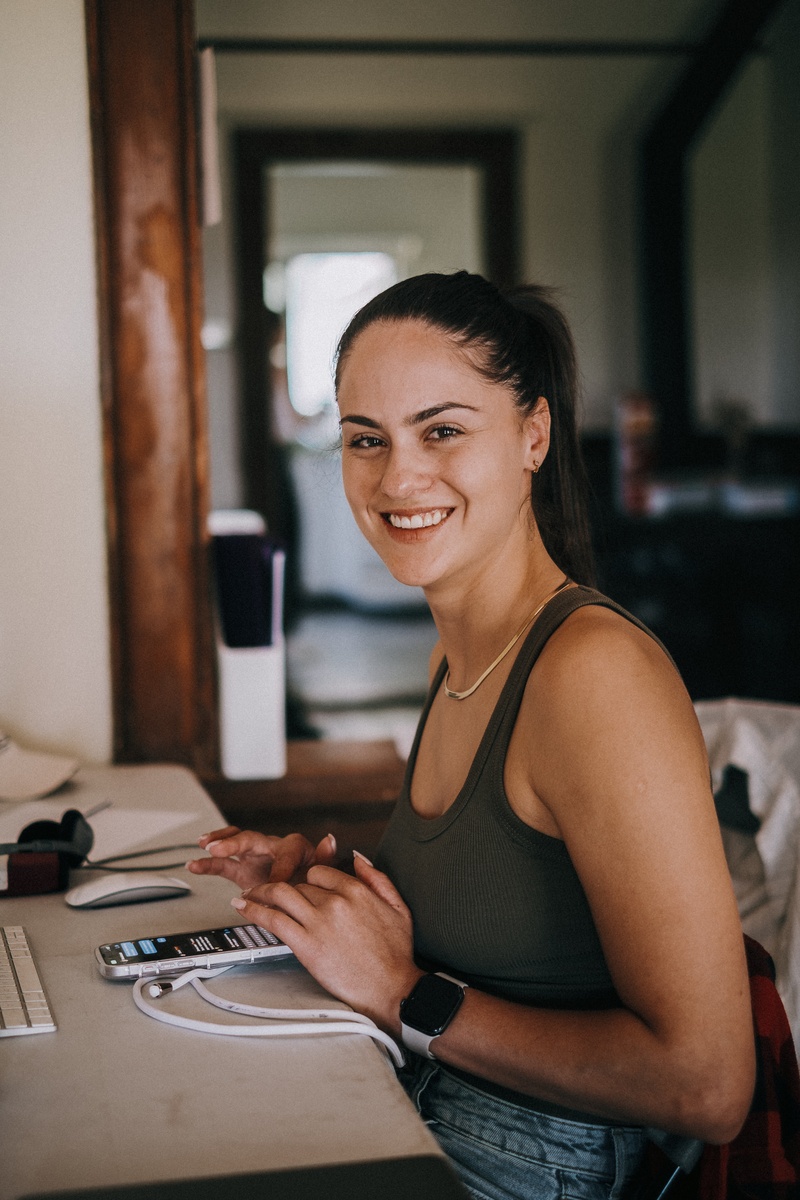 Photo by Ivan Skufinsky
1. What is the first film you can remember having an effect on you?
The first film that really got under my skin was Guy Ritchie’s Sherlock Holmes. I had a huge RDJ crush, but what hooked me was the quirky writing and the unique visual style. I watched it in every language I speak because I needed to show it to everyone I knew. I’ve seen it 11 times, and counting.
2. If you could work with one filmmaker, dead or alive, who would it be?
Denis Villeneuve. He’s a Canadian filmmaker who’s reached the highest level, and his visual storytelling is unmatched. I love revisiting his earlier work to see the through-line, how the slow pacing of Incendies shows up later in Blade Runner, and how the precise world-building of Arrival echoes into Dune. It would be a dream come true to work with him.
3. If you could remake any film, what would it be and what would you change?
Most recently, I’d say Mickey 17. I’m not a hardcore “the book was better” person, but my biggest pet peeve is when IP gets bought and then remade into something else. Mickey7 is dark and creepy. It’s about survival and colonizing another planet, with a few clever comedic reliefs. Bong Joon Ho is a great director, so I don’t want to overstep here, but sometimes it’s better to make a new movie than to change what already exists. If I remade it, I’d keep the book’s tone and keep the comedy as a seasoning, not the main flavour.
4. What is your biggest passion outside of being a filmmaker?
Do commercials count? I love them because they’re like making a tiny short film every month. Outside of the work itself, I’m obsessed with travelling. In 2025, I lived abroad for a few months and got to see places I’d never been before. Next year, my goal is to build my career in a way that lets me travel for work to combine both passions..
5. What are you working on now?
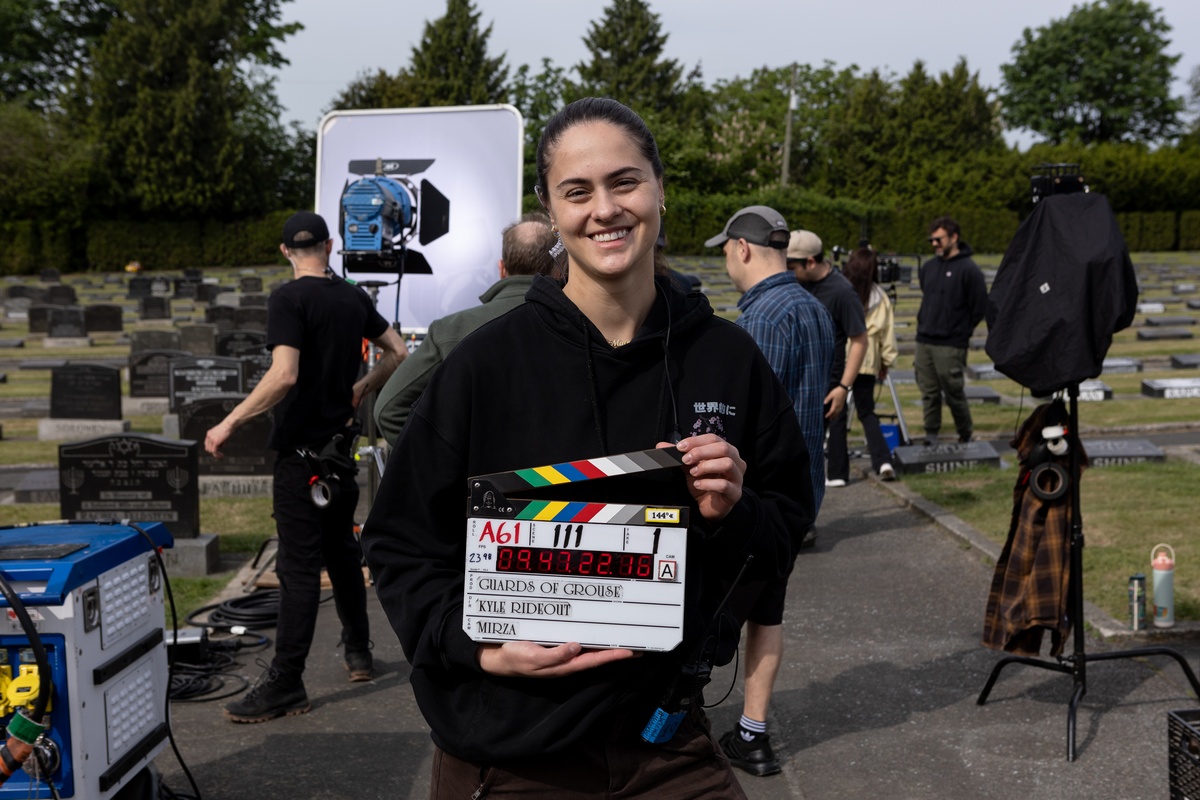 Mariya - photo by Bruce Yan
I’m shooting a fun snowmobile commercial in the Montana mountains this month, and building up momentum with more commercial work. I’m also developing an Iranian-Italian feature set in Toronto. It’s a dark comedy about a mother with Alzheimer’s who mistakes her son for a forbidden past lover. We’ve just received Telefilm Development funding and are in the process of attaching key cast.
6. Creatively, what inspires you to continue your journey in filmmaking?
I immigrated to Canada to make a name for myself in film, and it’s been an incredibly hard journey. But I’m stubborn, and nothing gives me more purpose than working alongside my crew and telling stories. I also care about who gets to be in the room: I try to give opportunities to young filmmakers, and whenever I can, I make space for my Ukrainian people too. It may sound small, but people took a chance on me when I was coming up, and I always try to pay it back.
7. Who are your frequent collaborators and what do they bring to your projects?
This is tough! I’m lucky to have a lot of collaborators who make me better. Boldly has consistently given me room to grow and opportunities to spread my wings. William F. Whites, especially Tug Phipps, has taken a chance on me again and again and supported not just my work, but my wilder indie short ideas. And the good people at Motion58 trusted me to line-produce a feature we’re currently in post on, which has been a major step for me. Beyond that, I’m constantly grateful for the local crew and vendors who come through in the clutch. This city has a real community, and I feel genuinely supported by it.
8. What is the most rewarding part about being a BC filmmaker? What is the most challenging?
The most rewarding part is the community. I can’t overstate how much it means to feel like people have your back. Vancouver is small enough that, within a few years, you’ve met most of the industry, and that’s when the real fun begins. You’re never flying solo in this line of work, and there’s a genuine sense that people want you to do well because a rising tide lifts all boats. The most challenging part is making original content in BC - and honestly, across Canada. I see talented colleagues struggle to get films financed and made, and it often feels like a steeper climb here than it is for our neighbours down south.
9. As a filmmaker, how do you measure success?
Oh, you mean the ever-moving target? The bar that resets every time? At the beginning of each year, I write a detailed wish list for every area of my life. I try to keep it optimistic, but realistic. When I feel like I’m not where I “should’ve been by now,” I open a list from previous years and look at what I dreamed of back then. Quite often, the things I take for granted today used to be my dream. That’s what helps me feel less anxiety and happy with my progress.
10. Tell us about a time you failed and how it helped you.
Oh, I fail all the time! Occupational hazard. My, failure ranges from constant rejections (festivals, grants, talent, financiers, distributors) to the everyday producing mistakes that cost time, money, or strain relationships. It’s stressful in the moment (I’ve got greys and I blame it on the job), but it’s also where you build your reputation, show how you recover, how you treat people, and whether you learn and improve. Just don’t forget to have fun and really make sure you enjoy what you’re doing!