Welcome to the The Hot Seat.
Every month we will feature a filmmaker who is redefining West Coast filmmaking. It's time we start shining that ever elusive spotlight onto those in our community who are at the forefront of the BC Indie Revolution.
Each featured filmmaker will answer the same 10 questions, giving insight into their minds, inspirations, aspirations and dreams. The first five questions are rapid fire. Quick. Juicy. Intriguing. The last 5 are more profound, insightful, all about filmmaking.
This month, we're inviting the beloved local producer/chilaquiles chef Luis Guerra to brave the Hot Seat. Let's dive in!
Luis Guerra is a Mexican-Canadian producer based in the unceded territory of the xʷməθkʷəy̓əm (Musqueam), Sḵwx̱wú7mesh (Squamish), and Səl̓ílwətaɬ (Tsleil-Waututh) Nations (aka Vancouver, BC). He has worked with commercial clients like Lysol, The Michelin Guide, Best Buy, and Destination Canada. Additionally, he has produced music videos for Sub Urban, Snotty Nose Rez Kids, Peach Pit, and Mother Mother. He recently produced The Chef & The Daruma, a documentary feature about the invention of the California Roll. The film screened at festivals around the world, taking home several international awards. In every project he is involved in he aims to inspire his collaborators to bring their best selves to the project. He strives to create respectful working environments where everyone feels involved, in order to make projects that feel impactful both locally and worldwide.
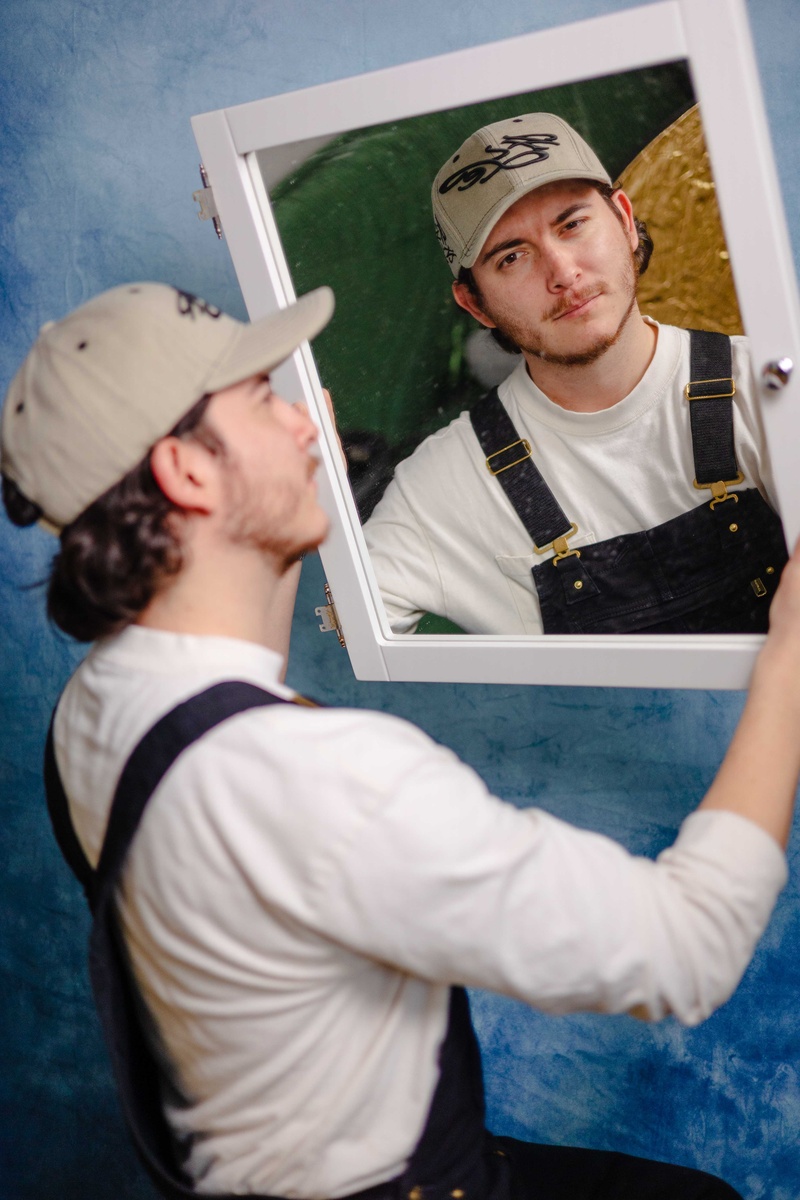 Photo by Josh Louie
1. What is the first film you can remember having an effect on you?
I remember going to the local cinematheque with my parents and my brother and watching Wes Anderson’s Moonrise Kingdom and being moved beyond belief. My family didn’t care much for it, but I was in tears by the end. I remember wanting to live in the world Anderson created, and to this day I still romanticize the idea of being a boy scout.
2. If you could work with one filmmaker, dead or alive, who would it be?
Favourites are tough, so I’d say:
Dead - Luis Buñuel or Satoshi Kon
Alive - Lucrecia Martel, Alfonso Cuaron, or Hideki Anno.
3. If you could remake any film, what would it be and what would you change?
I don’t think I’d remake any film. Making one is hard enough, so I think remaking one may have more challenges on top of the already existing mountain of challenges.
4. What is your biggest passion outside of being a filmmaker?
I’d say cooking is my number one passion, with filmmaking being a way to fund my passion for cooking (and eating).
5. What are you working on now?
I’m working on a commercial project for the government of BC, a short film with local director Bruna Arbex, and developing some narrative shorts and feature projects with longtime friends and collaborators.
6. Creatively, what inspires you to continue your journey in filmmaking?
The work coming out of similarly sized markets around the world is incredibly inspiring. At this present moment it feels like the cost of making a movie is entirely dependent on the approach the filmmakers want to choose, so the barrier of entry has never been lower. The same goes for distribution as I’ve seen many filmmakers take more creative and less conventional ways to market and showcase their work. Through grassroots social media campaigns as well as filmmakers partnering with independent movie theatres to showcase their work independently.
7. Who are your frequent collaborators and what do they bring to your projects?
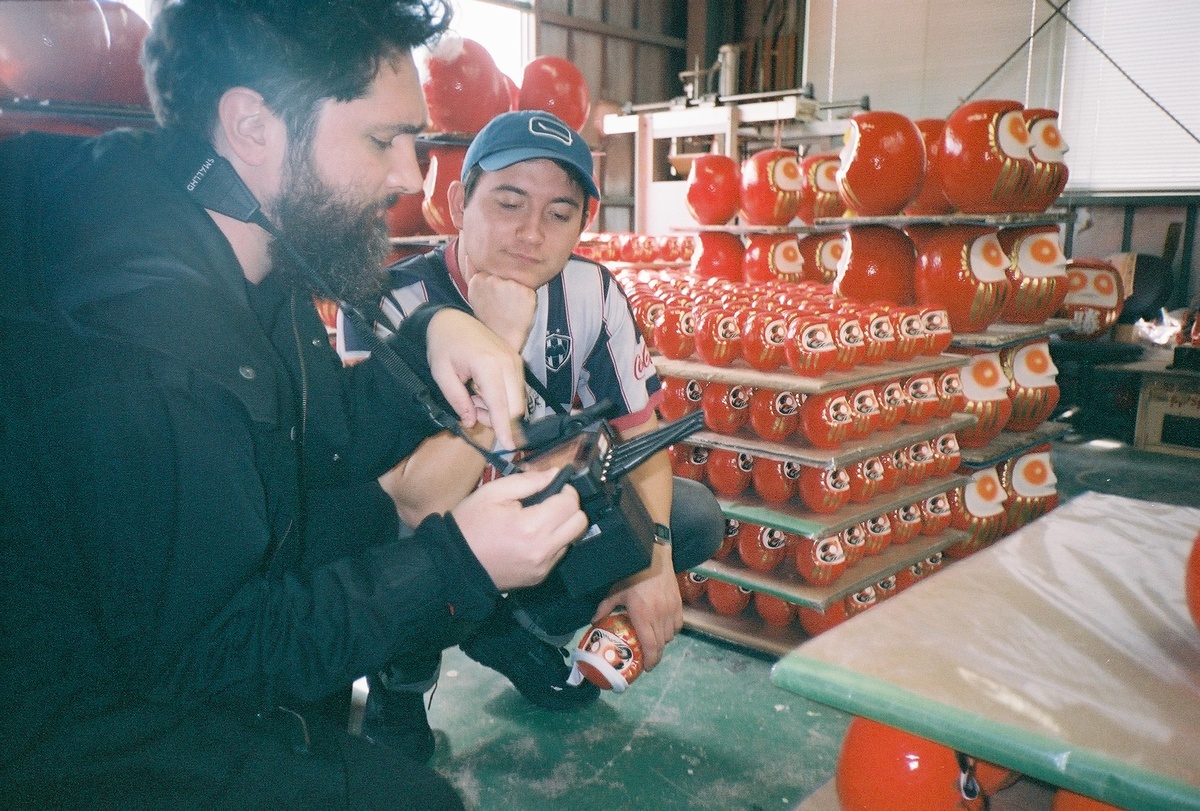 Luis on set with Mads Baekkevold
I’m quite fortunate to have made a lot of projects with a lot of the same people. It's a wonderful experience to see how the team you’re with grows together. My most frequent collaborators are:
Sebastien Galina - EP - a steady leader, a mentor, and a dear friend. Sebastien is the embodiment of a levelheaded producer. The calm in the eye of the storm. Projects he’s leading are a joy to be a part of as you know you’ll be heard, taken care of, and empowered.
Skye Dyken - Production Designer - Skye is one of the best production designers I’ve had the pleasure of working with. She makes the seemingly impossible possible under less than ideal circumstances. Her creative problem solving skills are as impressive as her taste. I’ve not worked with a more reliable PD.
Kaayla Whachell - DoP - Kaayla’s understanding of the needs of other departments as a DoP make her an incredible asset on set and in preproduction. She is able to preempt issues in her department based on how the project is developing, and is quick to offer creative solutions that work for not only her team but the wider production. On top of that, her work is downright stunning.
Mads K. Baekkevold - Director - Mads’ storytelling sensitivities make working on projects with him a dream. Not only am I constantly getting amazing media recommendations, but his leadership challenges others in his team to think outside the box and bring more of their own sensibilities to the project. Working on a project with Mads is deeply collaborative and I’ve become a better producer because of him.
Sterling Larose - Director - Sterling is set apart by his unmatched creativity and his ambition. Even after doing so many projects with him, the most out of any other director, I am still in awe of his ability to bring his ideas to life and translate them onto the screen. He leads by example, and is the director I’ve seen do the most work in prep ever. Which makes set days with him awe inspiring as he is able to pivot the creative vision when needed without sacrificing his vision. His dedication to the craft inspires his team around him to go above and beyond.
8. What is the most rewarding part about being a BC filmmaker? What is the most challenging?
The most rewarding part about being a BC filmmaker is the community. We have a small yet tight community of creatives that love the city we get to create in, and not only that but they share the same strong sense of community that I do. A win for anyone in our community is celebrated by everyone in it. We have an attitude that a rising tide lifts all ships. I think the most challenging aspect of being a BC filmmaker is the constant resistance to the younger sibling syndrome that a lot of BC based creatives seem to have. This attitude makes filmmakers feel like they need to create projects that are large in scope, and tell the world what a film from Vancouver/British Columbia is. Vancouver is first and foremost a service town, where projects all around the world come to take advantage of the talented crews, provincial and federal tax credits, and unique locations we offer here. This reputation as a service town, one that is constantly exposed to huge international productions, makes BC creatives feel that they need to create projects that compete in scope or quality to the projects the city services but with our own homegrown flair. This mentality, while noble in nature, is ultimately a distraction from what I believe BC creatives should focus on: effectively telling stories that people can connect with.
9. As a filmmaker, how do you measure success?
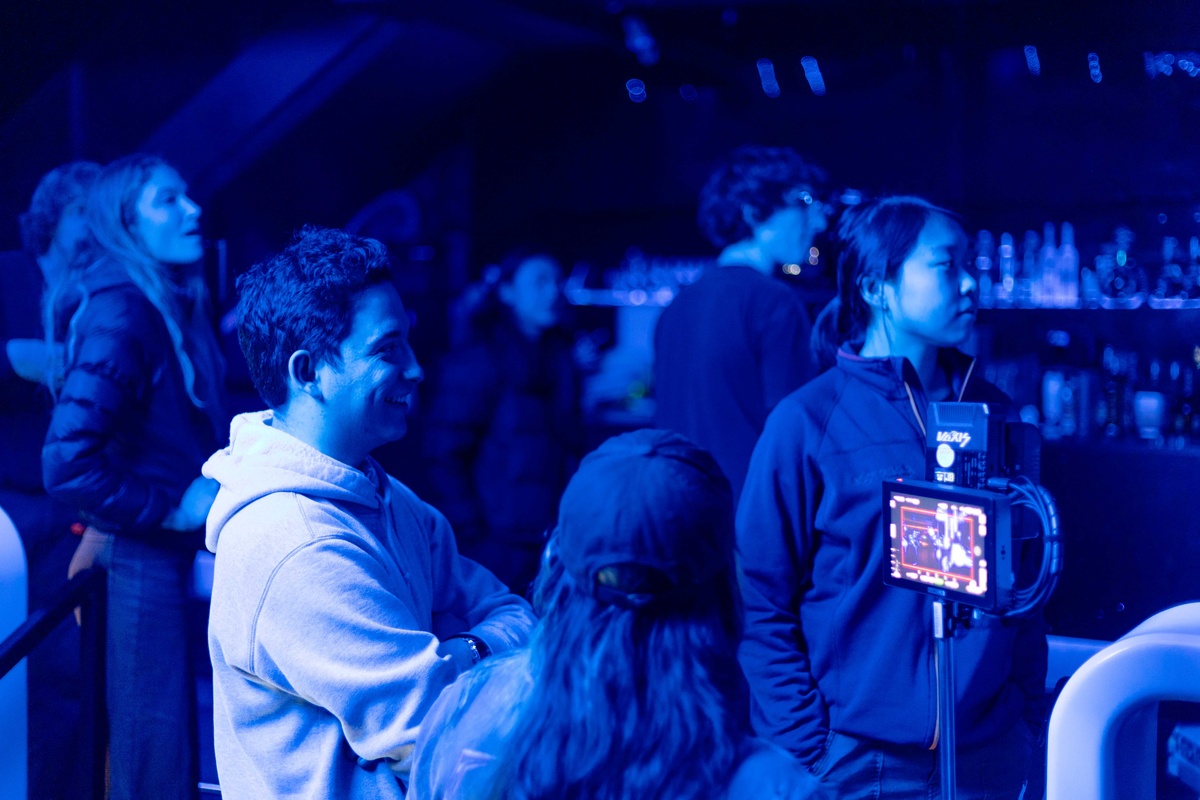 Luis on Set - Photo by Josh Louie
Success to me lies in the filmmaking process rather than the result. If I am able to focus on improving the small aspects of a production, the bigger picture takes care of itself. On a daily basis as a producer you have to be able to create an environment where everyone on the team is respected, given the space and resources to work with, and encouraged to bring their best self to the project. Days turn to weeks, and weeks to months, and by the time you reach the end of the project you’ll look back and see your focused effort on the daily processes of a production pay off. A mentor of mine once told me that as a producer you have the most reach out of anyone to influence any person’s experience on a project and it’s your job to make sure that they have a “good day”. To do that, you need to find out what a “good day” means to them and try to achieve their individual version of that. Everyone on set, from the PA to the Director, to the HMUA and the Gaffer, will have a different definition of what a good day means to them. A deep understanding of the filmmaking process is the only way to be able to empathize with your team. If by the end of a project the same team would like to do the same project, because everyone was able to reach their personal goals, then that’s a great marker of success.
10. Tell us about a time you failed and how it helped you.
One time I was a production coordinator for a commercial and I had the task of organizing meals for the talent, crew, and background performers. The whole team consisted of around 50 people. I worked with a local restaurant to cater the film shoot and had a PA pick up the meals. When the meals arrived, we organized all of the meals on several tables and had them laid out in a way that was easy for the cast and crew to come and grab their meals. Lunch is called so the team begins grabbing their meals and sitting down. The table is quickly emptied with only my meal remaining, however I see that there is one background actor that is left without a meal. I asked them if they ordered one and they said they did. So either someone took their meal, or the restaurant made a mistake, or I never placed their order. Regardless of who was at fault, the issue remained and this background actor needed a meal. They needed to start eating their lunch at the same time as the cast and crew so they could go back to work together. If they didn’t eat immediately, that could cause delays with the whole production and this seemingly small issue would have a larger negative effect across departments. So I gave them my meal and learned a valuable lesson. This moment taught me that one of the biggest parts of my job is to anticipate issues, create redundancies, and to focus on the issues at hand rather than the cause of them. While the issue and its solution may seem small, it’s still a lesson I carry with me all the time. As I work in a role with more responsibilities, I apply this lesson to issues that seem more severe but in essence are the same. It’s all part of facilitating a smooth process for the whole team, and that objective always beats the miniscule cost of creating redundancies. Now every time my team needs food I make sure that I have extras with multiple dietary restrictions accounted for, just in case.